A crypto wallet is software or a system used to manage blockchain accounts and authorize transactions. It normally does not contain coins as files inside the device. The blockchain records the assets; the wallet helps you view them and use the credentials or permissions required to spend.
That definition changes how you think about a lost phone, a deleted app or an unfamiliar token. The right question is what happened to your access—not whether digital coins fell out of the application.
Four jobs hidden behind one app icon
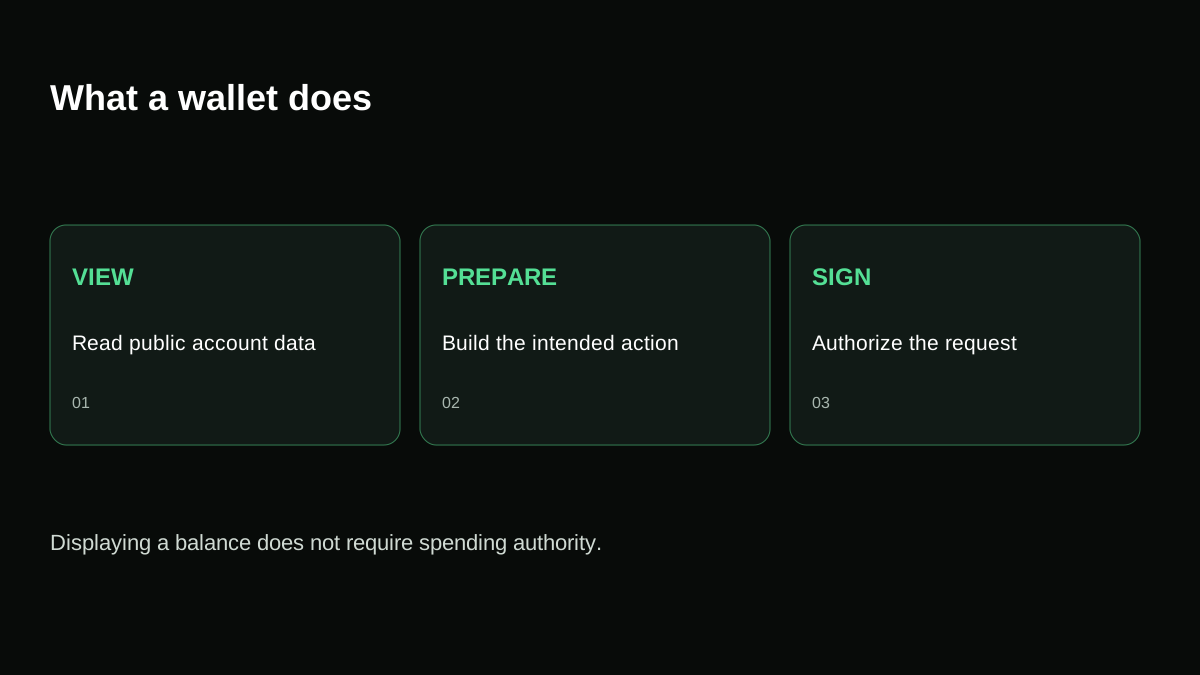
A wallet can display balances, provide receiving details, prepare transactions and arrange signatures. These jobs can be performed by different components. A hardware device might sign while a phone app prepares the request and displays network data.
Some wallets support several networks; others focus on one. Some display only selected assets. A missing token in the interface does not necessarily establish that the blockchain balance is gone.
Likewise, a displayed balance is not proof that the asset can be sold for the shown value. A scam token can appear in a wallet, and a price feed can be inaccurate or based on limited trading.
For each action, distinguish what the wallet knows from what it assumes. Network records can establish a balance; a market quote estimates value; a label identifies an asset according to the wallet's data sources.
Custodial and self-custody wallets
In a custodial arrangement, a provider controls the underlying signing process on your behalf. You access its service through account credentials. Its rules, operations and continued availability matter to your ability to withdraw.
In a conventional self-custody arrangement, you control the signing credentials. A provider may make the app, but that does not normally give it the ability to reset missing private keys or reverse a valid transfer.
There are also designs involving smart accounts, multiple parties or recovery services. Read the actual setup instead of assuming every wallet fits a simple password-versus-seed-phrase description.
Ask three questions before funding: who can approve a payment, what can block access, and what exactly restores control after device loss? The answers reveal your responsibilities more clearly than a product calling itself “non-custodial.”
The wallet password is not always the recovery secret
A local password often protects encrypted information on a particular device. A seed phrase or another recovery method can restore access elsewhere. These serve different purposes.
Changing the local password may not protect you after the recovery secret has been copied. Someone holding that secret may use another compatible wallet without knowing your app password.
Conversely, forgetting a local password may be recoverable if you still have the correct recovery material and understand the restoration process. Do not erase or reset a device until you know which information remains available.
Keep a clear record of the recovery method without exposing the secret in ordinary notes, support messages or screenshots. Read what a seed phrase is before treating a set of words as just another login detail.
What happens when you press Send
The wallet assembles a transaction, requests authorization and broadcasts it through network infrastructure. The network then processes it according to its rules. Your wallet's status message and the receiving platform's crediting process may update at different times.
Before approving, check the asset, destination, amount, network and total fee. If sending to an exchange, also follow its minimum deposit and memo or tag requirements where applicable.
An address copied correctly can still be the wrong destination if it came from an impersonator. Verify receiving details through a trusted channel, especially after a request to change a previously used address.
A small test can reduce the amount initially exposed, but confirm it actually arrives as usable funds. A transaction appearing in an explorer is not always the same as the recipient crediting the intended account.
Connecting a wallet is different from authorizing spending
A website connection commonly lets an app see selected addresses and request actions. A signature, approval or transaction can do more. Do not assume all confirmation windows carry the same risk.
Read what permission is being requested. An approval may authorize a contract to spend a token; another signature may have effects the website's friendly button label does not explain.
Disconnecting the website can end the interface connection without removing every on-chain permission already granted. Permission management depends on the network and asset involved.
For a beginner, keep experimental activity separate from funds you do not need for that activity. Separation limits what a mistaken approval can expose, though it does not replace understanding the request.
Choose by recovery and use case
Start with the assets and networks you need. Then consider device security, transaction clarity, backup requirements, accessibility and whether you want a dedicated signing device.
Download through verified official channels. A convincing app name or search advertisement is not enough. Check the publisher and official documentation, and be cautious with support replies that move the conversation into private messages.
Before depositing meaningful funds, learn how the wallet handles updates and recovery. Use its built-in verification features where appropriate. Never send recovery material to a person who offers to test it for you.
The best first wallet is one whose control and recovery model you can explain. Feature count matters less than understanding what you must protect and how you will use it.
FAQ
If I delete the app, are my coins deleted?
The ledger records are not deleted with the app. Access depends on whether you can restore the required credentials or recovery arrangement. Verify your backup before deleting, resetting or replacing anything.
Can I use the same account through another wallet app?
Sometimes, if the account and recovery standards are compatible. Extra passphrases, derivation paths and network support can matter. Do not import a valuable recovery secret into unfamiliar software merely to experiment.
Can one wallet hold every cryptocurrency?
No wallet should be assumed to support every network and asset. Even multi-chain wallets have limitations. Check support before sending rather than relying on the presence of a similar token name.
Is a wallet address secret?
It is generally intended for receiving or identifying an account, not for authorizing spending. However, sharing it can reveal transaction history or connect activity to your identity. Public does not mean privacy-neutral.
Sources
Checked November 19, 2026: Ethereum wallets, Ethereum accounts, Bitcoin wallet security and Ethereum security. Next: hot and cold wallets.